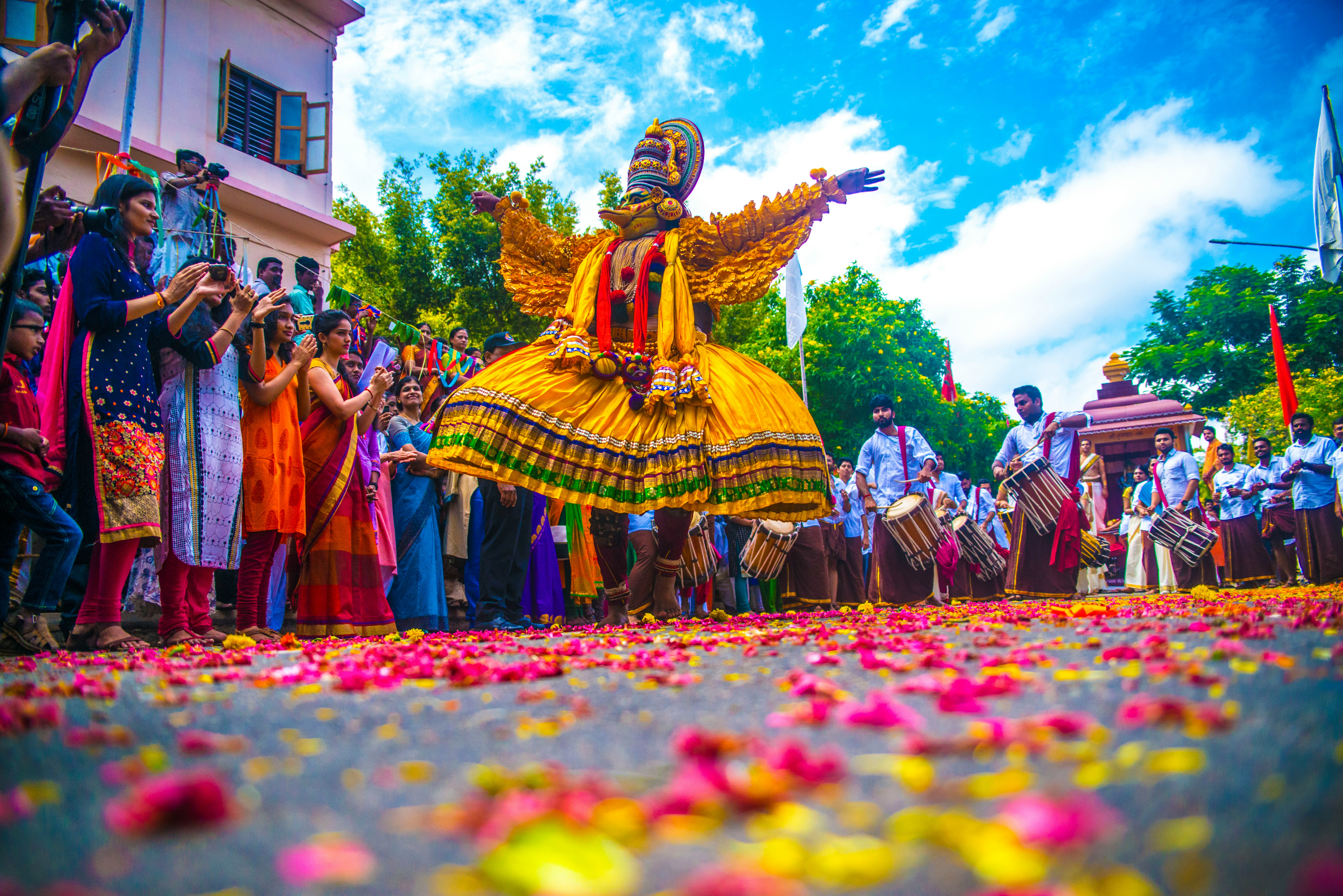
Some of the strongest couple memories are made during festivals. For GSB Konkani families, festive days create a natural way to share work, joy, and tradition. Cooking together, dressing for temple visits, welcoming relatives, and keeping little customs alive can turn ordinary celebration into something deeply bonding. This is true whether the couple lives near Udupi or has built a new life in Mumbai or Bangalore.
Healthy couple goals are usually simple. Show up for each other, show respect to both families, and make room for fun. Amchigelle couples who celebrate together often build a stronger sense of partnership because festivals reveal how they handle planning, pressure, and togetherness. Shared traditions do not make love less modern. They often make it steadier and more joyful.
Ganesh Chaturthi: The Heart of GSB Home Life
Ganesh Chaturthi is perhaps the most cherished festival for GSB families. Unlike public pandal celebrations, many Amchigelle households bring home a murti and observe a full ten-day pooja at home, with daily rituals, prayers, and prasadam. For a GSB couple, setting up the Ganapati together, managing the daily preparations, and welcoming relatives over ten days is one of the most revealing experiences of shared household life.
The festival ends with Anant Chaturdashi, the immersion day that carries a quiet emotional weight. Couples who have maintained the pooja together often say the farewell ritual deepens their sense of family and shared devotion more than any grand event. Cities like Mumbai, where the public celebration is enormous, bring their own energy, but many GSB families maintain the intimacy of home pooja regardless of where they live.
Shigmo: The Konkani Spring Festival
Shigmo is the GSB community's version of spring celebration, observed primarily in coastal Karnataka and Goa. Unlike the exuberant color-throwing of Holi in North India, Shigmo in the GSB tradition carries a more devotional tone. Traditional folk songs called Fugdi and Dhalo are sung by women in groups; the rhythms and lyrics passed down through generations give the festival its distinct community feel.
For newly married couples spending their first Shigmo together, the festival often becomes a moment of cultural transfer. If one partner grew up in Udupi and the other in Mumbai, Shigmo is where those two backgrounds meet. Learning the songs together, visiting temples, and participating in community gatherings creates the kind of shared memory that stays with a couple for decades.
Gokulashtami: Celebrating Krishna's Birth at Midnight
Krishna Janmashtami, known as Gokulashtami in the Konkani tradition, is observed with midnight prayers marking the birth of Lord Krishna. GSB homes typically decorate an elaborate swing (cradle) for Bal Krishna, and children and adults stay awake to welcome the moment of birth at midnight with prayers, bhajans, and the breaking of a dahi-handi.
The festival is special for its all-night energy and the family devotion it brings out. For GSB couples, Gokulashtami often involves cooking the baby Krishna's favourite foods, decorating the swing together, and keeping a vigil until midnight. These small acts of shared devotion build a household rhythm that extends well beyond the festival season.
Saraswati Puja and Vidyarambha
Saraswati Puja, observed during Navratri, holds special significance in the GSB community. Books, instruments, and tools of one's profession are placed before the goddess as offerings of gratitude and prayer for wisdom. Vidyarambha, the formal initiation of young children into learning, is typically performed during this time, with children guided to write their first letters by elders.
For couples with young families, this festival marks a meaningful milestone each year. The act of sitting with a child and guiding their first letters on Vidyarambha day is the kind of quiet family moment that GSB culture holds in high regard. It is a festival of patience, respect for knowledge, and continuity across generations.
Diwali and Naraka Chaturdashi
Diwali is celebrated across India, but the GSB community observes the day of Naraka Chaturdashi with a specific tradition: the Abhyanga Snan, an early morning ritual oil bath taken before sunrise, followed by sweets and new clothes. The story behind it, the defeat of the demon Narakasura by Lord Krishna, is recounted in many GSB homes on this morning.
In cities like Mumbai and Bangalore, where GSB families may celebrate alongside non-Konkani neighbours, Diwali becomes a moment to share community identity. Making GSB sweets like karanji, chakli, and ladoo together as a couple, and distributing them to neighbours and relatives, reflects the generosity that characterises the community's approach to celebration.
Other Festivals: Karthik Purnima, Ugadi, and More
The GSB festival calendar is rich with smaller observances that carry deep meaning. Karthik Purnima, observed after Diwali, involves lighting lamps near the tulsi plant in the evening and offering prayers for family wellbeing. It is a quiet, beautiful ritual that many couples carry into married life from their childhood homes.
Ugadi, the Konkani New Year, is marked by the Bevu-Bella tradition: a mixture of neem (bitter) and jaggery (sweet) eaten together to acknowledge that life holds both. For a couple, this is a natural annual reminder to accept both the hard and the joyful as part of a shared life. Makar Sankranti, Raksha Bandhan, and the harvest festivals of the coastal belt each add their own texture to what it means to live as a GSB Konkani family across the seasons.